2014
Postcard from Bangkok
Pilgrimage to Kanchanaburi War Cemetery
Finding Godfrey
Saturday, 7 June/2014. Today I went on a pilgrimage to Godfrey’s grave at Kanchanaburi War Cemetery in Thailand. It has been seventy-one years since my brother died a POW of the Japanese, forced to build the infamous ‘railway of death’ from Bangkok that was to join up with the railroad from Rangoon (Yangon) as a supply route for the Japanese Imperial Army’s forces in Burma.
In February 1942, the Japanese had taken Singapore, the bastion of the British Empire in the east, and in so doing Japan acquired a huge captive British force of almost 85,000 men (and also acquired invaluable equipment and machinery). Godfrey belonged to The 5th Battalion of the Royal Norfolk Regiment which was among those captured.
From remembered family conversations, I knew Godfrey had survived Dunkirk in 1940, but thought he had died in Burma. It was just something my eldest sister said recently that stayed with me, and a history documentary I was watching about the Second World War in Asia that prompted me to find out more. I was surprised to learn that in fact Godfrey had endured Japanese slavery in Thailand (then Siam), where I am currently visiting. He died here and not in
Burma, and is buried at Kanchanaburi.


In 1942-3 Allied Prisoners of War were forced to be part of the building of the Siam-Burma Death Railway in which 16,000 Allied POWs and a further 100,000 slave Asian labourers lost their lives. The story of its construction and the feat of building a bridge across the rapidly flowing River Kwai (not actually the original name of this part of the river), was immortalised – but some say very wrongly presented – in the 1957 Hollywood movie The Bridge over the River
Kwai, directed by David Lean, and starring Alec Guinness. In spite of the accolades and Oscar awards it received when it was released, survivors of the actual event and war historians alike have been critical of the film for what they see as its glamorisation of the lives of the prisoners who died building the railroad, and even of a suggestion of collaboration in as much as Allied engineering skills were supposedly sought and provided to solve construction problems. Make no mistake, say the alternate voices, the Japanese engineers knew how to build a railway as well as we did, and make no mistake this was a death railway with no human-level exchanges at all between the two sides.
Construction of the Burma-Siam railway began at both ends simultaneously. The first batch of prisoners was sent from Changi prison in Singapore to Thailand in June 1942. Prisoners of all ranks were sent, and the rule was that all prisoners, regardless of rank, were to work on the construction of the new railway.
A project to build a railway link through Thailand which would connect British possessions from Singapore, through Malaya to Burma had been envisaged by the British quite early in the 20th century, but the plan was abandoned because the problems were deemed to be too overwhelming: the unbelievably difficult jungle terrain, with dense teak forests, rivers and gorges; endemic diseases with no known cures; and intense monsoonal rains. But in 1942 the Japanese, now in control of the region and aware of the earlier British plans for a rail link, decided to press on. So a railroad that even their own engineers of the time estimated would take five years to build was ordered by the Japanese command to be built in 12 to 16 months, and work began in October 1942.

In the process, the POWs were subjected to unbelievably inhumane physical cruelty and starvation. They were given meagre supplies of the poorest quality rice, little or no protein, and often reduced to wearing bits of rag for clothing, which they would use as loincloths to retain a semblance of dignity. The doctors and orderlies amongst them had no medical supplies or instruments. There were no anaesthetics for amputations. The medics fashioned artificial limbs from bamboo, and lined around the socket with animal skin to reduce chafing; surgical instruments were often filed-down spoons.
Thus the prisoners worked, twelve hour shifts seven days a week, with no sophisticated machinery or heavy lifting gear, on empty stomachs, racked with disease, and in harsh tropical jungle conditions. Even if there had been at the time known treatments or cures for the diseases – for example, for malaria only quinine was known to be effective, for cholera there was nothing, and for festering tropical ulcers that ate away at the flesh, antiseptics were needed – the doctors, and the orderlies who had to rise to the challenge and replace dead doctors, had none of these. As progress on the railway fell further behind schedule, in April 1943 the Japanese demanded more men, and accordingly, a force of a further 3400 British and an equal number of Australian prisoners were raised from Changi. I do not know if Godfrey was among the 1942 or 1943 tranche of prisoners sent from Singapore to work on the railway. Japan had refused to be a signatory to the Geneva Conventions on the treatment of Prisoners of War, hence leaving themselves free to play by their own rules, outside of any censure. An analysis of the Japanese culture and psychology: worshipful attitude to Imperial authority as to a deity, belief in the honour of suicide sooner than surrender – may provide some clues to the unspeakable cruelty to fellow humans that were perpetrated by the Japanese in charge in this period.
Kanchanaburi War Cemetery is located on the main road through the town, which is about two and a half hours drive northwest of Bangkok, towards the mountainous border with Burma (now Myanmar). The River Kwai and the infamous 11-span metal bridge are close by. The cemetery itself is a serene and beautiful space, immaculately kept by the Commonwealth War Graves Commission, not a blade of grass out of place, carved out from an otherwise voracious jungle environment. There are 6,982 former POWs buried here, mostly British, Australian and Dutch, each nationality with its own section of the cemetery. The prisoners’ remains were exhumed from burial sites along the railway route by the War Graves Survey party at the end of the War in 1945, and reburied here. Either side of Godfrey are comrades who died on the same day. The remains of prisoners from America who had died along this south section of the railway were repatriated. Godfrey was the second son of my father from his first marriage, and both boys – Godfrey, and Carlton his elder brother – died while serving in WWII, Carlton at Tobruk on 5 June 1942, aged 27, and Godfrey one year later on Saturday, 29 May 1943, aged 25. I was four years old when we heard of Godfrey’s death. Even younger when Carlton was reported ‘missing in action, presumed dead’ I do not remember either of them, But there were framed portrait photos of both of them (taken at Doran’s the local photographer) on top of the piano when I was growing up, and they were names in the list of people I was taught to say prayers for at bedtime. I think I must have continued including them in my prayer mantra long after both had been killed.


It has taken a long time for one of us to come to Kanchanaburi to honour Godfrey. Today I was able to do that, on behalf of my eldest sister Cynthia and myself who are the only two family members remaining whose lives overlapped with his.
But today Ali and Andrea came too, along with Nura aged 10 and Omar aged 8. The children brought a lovely stone each and one for Auntie Cynthia, chosen from their garden in Bangkok and placed them at Godfrey’s last resting place.
Among the beauty and tranquillity, and colour and fragrance of tropical flowers between the headstones at Kanchanaburi, it becomes hard to imagine the pain and suffering that destroyed so many lives and so many young lives. But this is a place of peace, not death, and there are daily visitors from all over the world, and local monks in orange robes can be seen pondering the memorials at this site that honour those who are buried here. Godfrey Edwards, and our oldest brother Carlton Edward Edwards, are also commemorated on the War Memorial in Filey, Yorkshire – our home town.
Letter from Yangon and Yangon Revisited
June, 2014
[Last year, in a miraculous personal year of travel, I was able to visit two countries that had long
been on my to-do-if-possible list. This post is from my first visit to Myanmar (which most Brits
still insist on calling Burma), with POSTCARD FROM CUBA to follow soon.]
To M. … (5/5/13) The Shwedagon Pagoda is on a hill, and visible from all parts of Yangon. When it’s lit up at night the golden stupa, encrusted with thousands of diamonds, is a breath-taking site. It’s said to be 2600 years old (obviously built on over time and expanded to the huge complex of today), making it the oldest and most sacred of Buddhist sites in Asia. Nura and I can see the top of it from our hotel room window. Our hotel is near the lake that looks across to the house of The Lady; on the way back from the National Museum today we took pictures outside Aung San Suu Kyi’s gate.
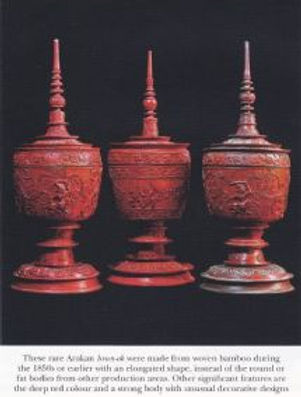
Back in Bangkok. Heavy laden with purchases of the lacquer-ware objects for which the country is famous – items mostly bought by Ali, who has a passion for good-looking and expensive big artistic pieces (a few smaller and cheaper bits bought by Mama).


Apart from Aung San Suu Kyi and her late father, equally revered and remembered there is U Thant, whose son is today a prominent local worthy, and using his muscle to campaign for the preservation and restoration of the old colonial buildings before they get pulled down to make way for the sort of high-rise stuff that blights Bangkok. Apart from the Pagoda, there are many fine examples of ‘high colonial architecture’ that are worthy of note in Yangon. One academic mused of the city’s architectural heritage: ‘Socialism in Myanmar, like socialism in EasternEurope [and here he could have added Cuba], is much denigrated …’ but for all its ills ‘…socialism was wonderful for preserving old cities.’ Dictatorships and embargoes may indeed and unwittingly be the friends of architectural conservation in that international developers hesitateto risk putting their money in countries under the rule of the likes of the Castro brothers (but even for Fidel and Co. capitalism is replacing socialism, so I’m in a rush to get to Havana before it too loses its identity).

The in-flight magazine had an article on ‘The Bards of Burma’ who introduced Myanmar to the Western world – Orwell, Somerset Maugham, and Kipling, labelled The Prophet, The Cynic, and The Storyteller respectively. I’ve bought and started reading again Burmese Days and loving it, especially as this locally produced edition was actually bought in Burma – all this stuff really will, as I mentioned to you before, have to serve as my India experience. That’s it for now. Hardly anybody writes letters these days, especially when they can’t see much further than the end of their nose, but I thought you might like to get a letter in the post from these parts.
P.S. I found a book at Yangon airport called ’Farther India’, written in 1904 by an old colonial, about ‘Burma, Siam, Kambodia and Cochin China’ (whatever the latter refers to) that I can’t wait to read.
June 2014 - Yangon Revisited
CURRENCY. The currency is Kyat (MMK), around 1,000:US $1 – a bit like the old Italian lire, when it was easy to feel like a millionaire on changing a few dollars. No real need for currency exchange in Myanmar, however, because US dollars are accepted everywhere, and hotel and restaurant prices are listed in dollars. Thai Baht, the currency of neighbouring Thailand, are also useable. I had forgotten that dollar bills have to be pristine. There’s to be no evidence of folded down corners, folds down the middle, pencil or pen marks – or they’ll be handed back to you with a request for notes in mint condition, even by street vendors. What happens to all this crisp new currency once you’ve passed it over is a mystery to contemplate, for used notes do not seem to be in circulation.


The in-flight magazine had an article on ‘The Bards of Burma’ who introduced Myanmar to the Western world – Orwell, Somerset Maugham, and Kipling, labelled The Prophet, The Cynic, and The Storyteller respectively. I’ve bought and started reading again Burmese Days and loving it, especially as this locally produced edition was actually bought in Burma – all this stuff really will, as I mentioned to you before, have to serve as my India experience. That’s it for now. Hardly anybody writes letters these days, especially when they can’t see much further than the end of their nose, but I thought you might like to get a letter in the post from these parts.
P.S. I found a book at Yangon airport called ’Farther India’, written in 1904 by an old colonial, about ‘Burma, Siam, Kambodia and Cochin China’ (whatever the latter refers to) that I can’t wait to read.
BOOKS. It appears that the people are avid readers – and the writer Thant Mynt-U confirms this to be so. Books are everywhere – school books in the local language, as well as adult fiction and non-fiction. Many small shops and street stalls are dedicated to their sale, and all such sellers have an English language section. It’s easy to find some classic titles by old and new writers. I bought from a street vendor a copy of The Silken East: A record of Life and Travel in Burma by V.C. Scott O’Connor (1904), Where China Meets India: Burma and the New Crossroads of Asia, by Thant Myint-U (2011), and – once again – Burmese Days by George Orwell (1934), all for a total of around £10, attractively reproduced in new local editions for accessibility and affordability.
DOWNTOWN. The downtown is laid out in a grid pattern, with wide boulevards in the old imperial centre, and impressive colonial-built government and commercial offices still standing and mostly in use, if with the change of purpose. Down by the river, the Strand Hotel is still the Strand Hotel, and the Post Office is still the Post Office and was buzzing with customers the day we nipped in to admire the high-ceilinged collonaded architecture. (What is it with post offices in these old imperial capitals? Have you seen the one in Asmara?)
Things seemed a bit more expensive this year than last.
A programme of investment in roads and pavements along the main streets and avenues could transform the appearance of the city centre to former splendour, and make walking easier – it has an impressive architectural heritage to merit such.
The gilded stupa of the Shwedagon (which I mentioned last time), overlooks the city and is a constant presence impossible to ignore. I have now added more pictures to Letter from Yangon including some of the dozens of smaller pavilions, pagodas and shrines that augment the site, also covered in gold leaf and glass mosaics. The scent of incense and jasmine that pervade, however, must be experienced in person!
External TV stations were not available in our hotel, as Myanmar’s subscription services are apparently shared with Thailand, where the new military government has blocked these transmissions since last week’s coup. Really good English is surprisingly widely spoken. One writer speaks of pre-revolution (1962) Rangoon as being renowned for world-class schools and a top-notch university.
Certainly older Burmese/Myanmarese – maybe in their sixties and seventies – seemed eager to make use of this facility, happy to initiate a conversation with this older Englishwoman they observed on their streets! Almost everyone wears the sarong-type longyi with a shirt or blouse – tied differently by men and women – and carries a jaunty umbrella against the scorching heat. Just as it’s impossible to talk about Yangon without mentioning the Shwedagon Pagoda, it’s impossible not to mention the amazing lacquerware artistic tradition of the country. The book: LACQUERWARE JOURNEYS: The Untold Story of Burmese Lacquer by Than Htun (Dedaye) is an essential reference on this national artistry. And Than Htun himself can be found at his shop, Unit 21, Bogyoke Aung San market (1st Floor, Main building) in central Yangon.
Remembering IM Lewis and PTW Baxter

May 10, 2014
Two giants of African studies were lost to us in March: Paul Baxter on 2 March 2014, and Ioan Myrddin Lewis on 14 March 2014. Both were social anthropologist, both studied under EE Evans Pritchard when anthropology was flourishing at Oxford in the early 1950s. Both spent a lifetime of study on people of the Horn of Africa, Paul on the Oromo of Ethiopia, and Ioan on the Somalis.
Erudite tributes to the scholarship and contributions to knowledge of both have appeared in many places in the period since their deaths: lists of their published works, the fact that their doctoral fieldwork became standard texts in their respective fields of Oromo studies and Somali studies for succeeding generations of scholars. I wish, too, to remember them on my blog.

Ioan M.Lewis
Paul Baxter
El Salvador
August 3, 2014
Last week I heard on the radio what seemed to me like an overdue and most welcome decision by Pope Francis to lift the block on the beatification of murdered Salvadoran Archbishop Oscar Romero.
A year ago I visited El Salvador. Previously almost totally ignorant of Central America’s culture and history, I came away with some exciting and also searing memories (one of which I have talked about earlier in my Blog post on the Guatemala Lienza). Of El Salvador, two of many recollections have continued to replay in my head: one is what I learned about Archbishop Romero, and another the visually extraordinary El Rosario church in San Salvador – with its own bloodstained chapter in the country’s recent history of repression.
About the first: Archbishop Romero was assassinated in March1980 whilst celebrating mass at a church in San Salvador. Since becoming Archbishop in 1977 he had moved to being an outspoken critic of the increasing repression of the people under the right wing Salvadoran government, and of the military Junta that succeeded it. Death quads, unlawful killings of civilians, and ‘disappearances’ of those opposed to the regime were the order of the day. Left-wing rebels began an insurgency and civil war which was to continue for 12 years (1980-92). Archbishop Oscar Romero was one of the leading voices in the Catholic Church in El Salvador calling for social justice. In February 1980 he published an open letter to US President Jimmy Carter in which he pleaded with him to suspend the United States’ ongoing support for and programme of military aid to the Salvadoran regime. He advised Carter that “Political power is in the hands of the armed forces. They know only how to repress the people and defend the interests of the Salvadoran oligarchy.” On 23 March 1980, the Archbishop called upon Salvadoran soldiers and security force members to not follow their orders to kill Salvadoran civilians. A day later, on 24 March, he was assassinated. At his funeral a week later, snipers shot dead more than three dozen mourners.


Today in El Salvador the Monseñor is already widely venerated by the poor, but for years, calls for the beatification of this martyred and populist priest were blocked and delayed by powerful circles in the Catholic Church because of concerns for what they considered his ‘Marxist ideas’. Archbishop Romero was a proponent of Liberation Theology – an interpretation of Christian faith through the perspective of the poor. Now Pope Francis has signalled that this human rights activist should progress to sainthood. No-one has ever been convicted in connection with his murder, although a United Nations report indicated that the assassination was commissioned by a known major in the Salvadoran army during the time of the civil war, and who was the founder of El Salvador’s right wing national republican party, ARENA (that lost the Salvadoran elections earlier this year by less than 1% of the vote to the left-wing FMLN- Farabundo Marti-Front for National Liberation).


Of Iglesia El Rosario: This church is very different from, and challenges the ideas of both traditional and modern churches. It was designed by Ruben Martinez, one of El Salvador’s most prominent sculptors, and it is renowned as one of the most unique churches in the Americas. On the outside and from a distance it is dark and inauspicious, resembling an aeroplane hangar.
Once you step inside, though, you are in an amazing space full of beautiful sculptures, and of rainbow light that changes as the sun moves across the sky above and casts different angles of sunlight and mood.
Beyond its architectural originality and creativity, events at El Rosario in February 1977 tie it inexorably to the people’s suffering under the terror campaigns of their government at the time, and to the eventual civil war. Several days of a demonstration against the government had taken place, with protesters occupying the main square of San Salvador, culminating in the National Guard opening fire on the protesters. When the shooting began many of the demonstrators took refuge in the nearby El Rosario church, situated alongside the plaza. For three days the wounded and dead were trapped inside. A multitude of bullet holes are still visible in the structure.
Oscar Romero’s debut as archbishop coincided with these bloody events, though he was away from the capital at the time. A truce was brokered by the retiring Archbishop Chavez and his fellow clergy, so that the church could be evacuated of the dead and wounded, and of others who had sought protection there from the bullets and tear gas. Reports of the number of dead vary from scores to over a hundred. Bullet holes remain in the wrought iron entrance of the front facade of the church as a reminder of the siege. As one visitor has remarked, to be unmindful of that event would be to miss some of the importance of this church in El Salvador’s recent history.
It is ironic that at the time of his appointment Archbishop Romero was selected because he was considered by Rome to be on the conservative wing of the church, and by the Salvadoran oligarchy to be ‘one of us’. A recent article in the Los Angeles Times, Sainthood not Enough for Salvadoran
Archbishop Oscar Romero, addresses the lingering pain and need for justice felt by Romero’s supporters.
San Salvador Cathedral, where Archbishop Romero is buried in the crypt. His shrine is a regular place of pilgrimage for hundreds of ordinary Salvadorans, whilst above, in the main body of the cathedral, the Opus Dei people worship.
Thoughts on Israel, Palestine, and Walls
August 16, 2014,
In 1989 the Berlin Wall, the physical and symbolic division between East and West during the Cold War, came down after twenty-eight years. Its destruction, which was nearly as instantaneous as its creation was celebrated around the world. A little over a decade later, on 14 April 2002, Israel started building a separation wall between Israel and the West Bank and East Jerusalem. as a measure to protect Israelis from Palestinian suicide bombers. The full route, as outlined in the blueprint approved by Israel’s Ministry of Defence, is for a barrier approximately 700 km in length when finished (to date about 80% completed), and in places presenting a surrealist concrete structure with access doors and barbed-wire topping that is 8 metres tall. The West Bank separation barrier” or “apartheid wall” depending on whom you ask, is a compelling physical symbol exemplifying the ongoing Israeli-Palestinian conflict.


Two sides of the wall, two sides of a story
Photographs 1-4 are from my trips to Israel between 2008 -2011 and show the Jerusalem - Bethlehem checkpoint from the Israeli side and the graphic commentary from the Palestinian side of the wall. Picture 5 shows Wall construction in Anata, Dec. 20, 2006. Photo by Yotam Ronen, from his website.
Which makes more sense to you: Ethnic separatism and a two-state ‘solution’, or one cohesive state where every citizen is equal in law? Walls have symbolised many things in history, including protection against the enemy by the erectors. When you make a friend of your enemy the walls can come down, just like it happened in Germany in 1989 when the two sides united again as one nation, one Germany.
Words that resonate – what would your words be?
reparation … accountability … truth … reconciliation …peace …unity …particular v. everyman; chosen v. dispossessed; superior v. inferior; special v. regular; narrow v. inclusive; oppression v. resistance; belonging v. excluded, destroying v. building; check points v. trust; embargo v. trade; separatism v. co-existence …
Remembering Mohamed Osman, 1937 - 2014

October 4, 2014,
The Somali diplomat, patriot, writer, and friend of many, Mohamed Osman Omar, died at his home in London of a sudden heart attack on 4 October 2014 aged 77.
When I first met Mohamed Osman in Mogadishu in 1965 we were both working as journalist in SONNA , the Somali National News Agency of the Ministry of Information. Although still a young man in his twenties, he had already begun to mark out an impressive career in public service, first in the Post Office then at the fledgling National Assembly where he worked as a
recorder of the daily debates and proceedings of Parliament. He had already studied in China, where he became fluent in Mandarin Chinese, and had been on a sponsored visit to the United States – which had coincided with the heady days at the height of the civil rights movement – and he had taken part in the historic Civil Rights March for Jobs and Freedom in Washington DC in August 1963. How these early experiences helped mould his thinking one can only conjecture, but he was a lifelong liberal, for whom Islam was a major pillar of support and guidance, and he was ever constant in his observance of the traditional acts of faith.

His dedication to nation characterised his profession path, in the course of which he served as a journalist, career diplomat, ambassador, and commentator on issues of national interest. A staunch nationalist, he believed in and wrote about his beloved Somalia, never losing hope in the eventual realisation of a Greater Somalia, even in the face of and despite the country’s last painful decades of fragmentation and disunity. At every opportunity, in every forum, he could be guaranteed to espouse that cause and remind his audience of the 1946 Bevin Plan for uniting Somali-inhabited territories following WWII, and of the greater Somalia concept which is symbolised in the five-pointed star of the Somali flag.
But his was not a blind or blinkered or humourless nationalism. In his book The Road to Zero: Somalia’s self-destruction, which is ‘Dedicated to the Somali People’, and which we had the privilege of first publishing under the HAAN imprint in 1992, he gives a life-and-times account, and of some precursors that led to Somalia’s 1991 civil war and the unravelling of the state.
The following extract from Zero …, which recalls a weekly ritual in the Somali Embassy in Iran where he was Counsellor in the late 1970s, is surreal, funny, and indicative of the national rot that had begun to infest the Siad Barre regime:
At the embassy there were only three diplomats – the Ambassador, theCounsellor, and a Second Secretary. Every Tuesday morning before we began work the Ambassador gathered us at his office and lectured us on the virtues of socialism and the ‘Blessed Revolution’. About the President of the Supreme Revolutionary Council, Mohamed Siad Barre, he would tell us thhat The Father of the Somali Nation had dedicated his life to the people. At the end of these weekly meetings we would pledge to follow the commandments of the Political Office, and we would stand and sing Guul Wade Siad, the song dedicated to the President. This behaviour was bizarre, and we appeared stupid, but we had no choice in the matter. None of us dared to question our action. I would have liked to know how serious the Ambassador was about this veneration, but could not ask. The local staff, sitting in adjacent rooms, could hear us singing. They too must have wondered what we were doing, but would not dare to ask. For anyone to raise questions would have been criticism of the Revolution, and considered kacaan diid [anti-revolutionary]. (pp130-1)
Mohamed was a prolific writer, with seven books and countless journal articles and web posts to his name. The latest of his posts appeared on markacadeey.com last month, a few weeks before his death. It is, typically, a thought provoking article discussing the abuses committed against civilians, including women and girls, by African Union soldiers deployed in Somalia (and elsewhere in conflict zones in Africa). Drawing on his knowledge and experience of international relations and conventions, the article calls for a policy rethink, including a lifting of the current immunity from prosecution that the AU soldiers enjoy.
Mohamed Osman was from one of the Somali Reer Hamar lineages, inhabitants of the ancient stone towns of Somalia’s Benadir coast, whose legendary history and traditions speak of Arabian and Persian/Iranian influences. He was very proud of his heritage, of the contribution of this ancestry in spreading Islam to the interior of the country over many centuries, and of the seminal role of Reer Hamar icons in the independence struggle of the 1940-50s and the founding of the SYL independence party.
I remember Mohamed as a true gentleman, generous and gregarious, who knew everybody. From the early days of our friendship he was my window on the world of Reer Hamar (which eventually became the subject of my doctoral research), telling me stories of his people, introducing me to the narrow streets and architecture of the Hamarweyne stone town quarters of Mogadishu, and to the community’s festivals, rituals, food and society – all so very different from those of the nomadic traditions into which I had married and which I had naively thought to represent all Somali society. He introduced me to his Sheikh, the theologian and human rights defender Sheikh Abba who taught me much about the history of the coastal people.
Mohamed loved entertaining people with the food he had cooked – Reer Hamar sweetmeats and such, and classic Italian dishes; in whichever country he found himself he would seek out the best coffee beans to make his favourite espresso in his Italian cafetiere. Coming as he did from the Shanshiye lineage, he could of course hand sew a buttonhole and set a zip into a pair of trousers. He could make you laugh with his endless stories. As my friends from the north might say of such a person: nin magaalo waaye – ‘the man was a town in himself – he had a bit of everything’.
In the tradition of Reer Hamar, he knew he would marry Mana from the time he was a young boy. The marriage produced five boys and two girls and lasted more than five decades until Mana sadly pre-deceased him in 2009.
A bright light went out the day Mohamed Osman died, but his was a life well lived, and he leaves a rich legacy – of memories for those who knew him, and a website dedicated to his motherland to inform those who follow.
View Mohamed Osman ‘s website at: www.ambassadorosman.com
Rembrand - The Late Work Exhibition
December, 2014,
I went to the highly acclaimed new Rembrandt exhibition, ‘Rembrandt – the Late Works’, at the National Gallery in London on 24/10/14 with Val Matthis, who some of you may know (she was once, years ago in the 1960s, in the Peace Corps in Somalia). Breathtaking large canvases, predominantly portraits, dominate each of the seven rooms of the exhibition, flanked by many smaller drawings, prints and paintings. Of particular interest to me were the larger works. Along with the portraits of local worthies, inspirational biblical and religious figures, heroines from history and legend, and of more ordinary citizens, one can’t help but be struck by the sheer number of self-portraits. And as if to underline this detail, the official commentary remarks that ‘his own face is a landscape the artist knew extremely well’ or words to that effect. One explanation for Rembrandt having painted himself so often may be that it was common for the rich and famous of the period who had their portraits painted, also to have a portrait of the artist to hang alongside the one of themselves.

Remarkably, perhaps, the artist does not shy away from painting the lumps, bumps, increasingly sagging flesh, and the frizzled grey hair of his ageing years. The care-worn face looks straight at us, with no sign of pretence, vanity or self-obsession, seemingly inviting the viewer to penetrate to the character within. (These are. in comparison, so unlike
the self-portraits of fellow Dutchman and near-contemporary van Dyck, who mannerly glances at us over the shoulder, and in one instance poses himself beside a huge staged sunflower. )
The amount of time and paint that went into the creation of one of these works of art by Rembrandt are hard to imagine, and the thought processes and technical skills immense. (I am an admirer of modern art, but to make another comparison, compare in material alone and variety of techniques – he was probably the first artist to use a palette knife, for example – in a Rembrandt canvas with one by Rothko.) To earn a living as an artist, and to ‘defy fashionable trends to create powerful works of great individuality’, must have demanded enormous devotion and belief in the importance of what he was doing. Undeterred by his declining years, what he accomplished in the period from the early 1650s to his death in 1669 aged 63, as covered by this exhibition, is astonishing. And what he accomplished was often in the face of financial misfortunes, and personal tragedy, which included the death of his son and common law wife.
